
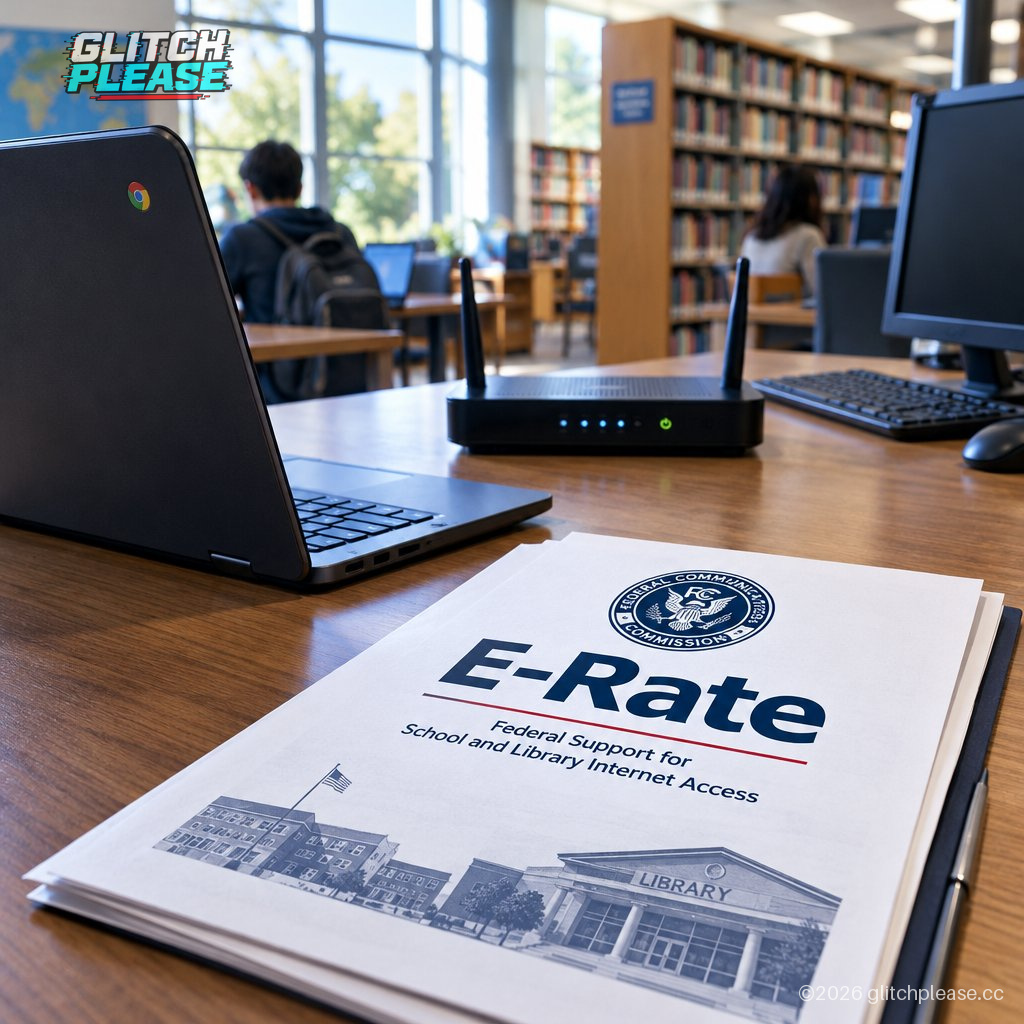
Schools and libraries are pushing back against an FCC review that could put federal broadband support at risk, as chair Carr questions whether the E-Rate program has outlived its purpose. The proposal asks whether the program’s mission has been fulfilled—not whether the FCC should simply pull the plug tomorrow. That distinction matters, even if the prospect of losing funding has understandably got educators and librarians reading the fine print.
Created by Congress in 1996, E-Rate helps schools and libraries pay for Internet and telecommunications services. Carr’s proposal argues that access has expanded substantially over the past three decades and asks whether continued funding fits Congress’s original goal. The national library group says the FCC cannot end the program: Congress mandated it, while the commission is responsible for administering it.
That leaves a significant question hanging over the proceeding. Carr could argue that the program has completed its original mission and that the FCC therefore has authority to end it. But that is an argument about the agency’s legal power, not proof that the need for support has vanished. Broadband access may be far more widespread than it was in 1996; that does not automatically mean every school and library has adequate service today.
The American Library Association is also challenging the FCC’s apparent interest in children’s screen time and educational outcomes. The association says the commission lacks authority and expertise to regulate those issues. Under the law cited in its filing, decisions about what content is inappropriate for children belong to school boards, local education agencies, libraries, or other responsible local authorities. The law also bars the federal government from setting criteria for those decisions or reviewing local judgments.
In other words, a debate over broadband subsidies is drifting toward a question of who gets to decide how children use the Internet. The library association’s position is that Congress already gave that responsibility to local institutions. The FCC, meanwhile, is asking whether E-Rate still serves its original purpose. Those are related questions, but they are not the same one—and bundling them together does not make the agency’s authority any clearer.
The Texas Library Association says the case for continued support is particularly obvious in its state. It told the FCC that only 35 percent of Texas public libraries receive E-Rate discounts, compared with 65 percent of public libraries nationwide. It also said only 55 percent of Texas libraries meet the FCC’s own recommended broadband speed benchmarks. The association called that gap evidence of unmet need, not proof that the need has passed, and argued that libraries should receive more funding to reach modern speeds.
The FCC’s review is not a final decision to terminate E-Rate. But the dispute exposes the awkward gap between declaring a mission complete and showing that the people it serves no longer need help. If the commission wants to make the case that E-Rate has done its job, it will have to contend with the libraries still falling short of its own speed benchmarks. Broadband progress is real. So is the unfinished work.
Sources: Glitch Please! and Ars Technica — https://arstechnica.com/tech-policy/2026/10/schools-libraries-plead-with-fcc-to-scrap-idea-of-killing-2b-broadband-program/ — Source article and quoted filings by library organizations
Generated by AI
