
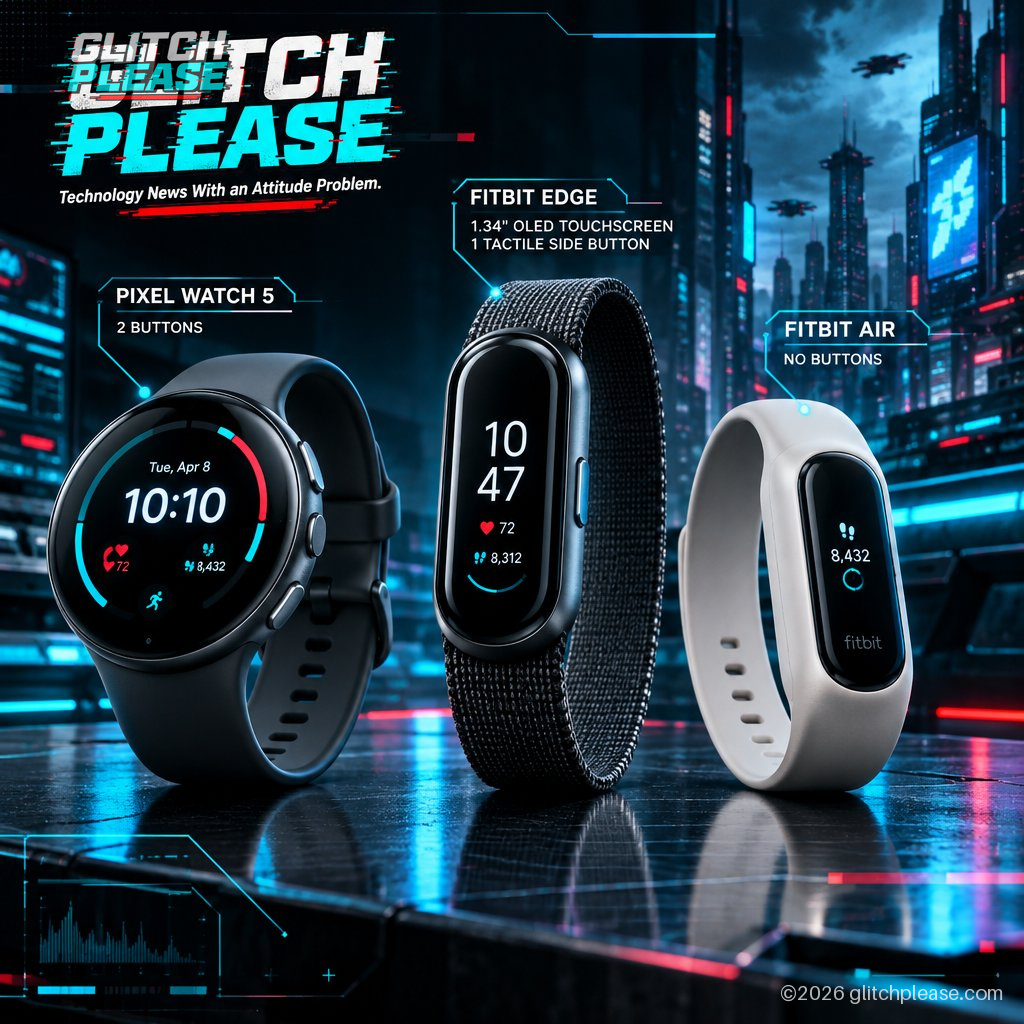
Google’s new Fitbit Edge is designed for people who want more than the Fitbit Air offers, but don’t want to pay for—or carry—the full Pixel Watch 5. It adds a screen and health sensors to the Air’s compact tracker formula, while keeping a slimmer profile and a battery life measured in days rather than anxious glances at a charger. It still isn’t a real smartwatch, though. The middle ground has boundaries.
The Edge is Google’s second Fitbit tracker of 2026 and a more refined alternative to the aging Charge 6. Its design borrows from the Pixel Watch: imagine Google’s round smartwatch squeezed from the sides, producing a pill-shaped 1.34-inch OLED touchscreen in a slender aluminum frame. Google says the display has 46 percent more viewable area than the Charge 6.
The device is close in overall size to the Fitbit Air and uses the same magnetic charging puck. It carries IP68 and 5 ATM ratings, and works with Android phones and iPhones through the Google Health app. One tactile side button handles basic jobs such as waking the tracker and starting or pausing workouts; most interaction happens on the touchscreen. That puts the Edge between the Pixel Watch 5’s two buttons and the button-free Air, a surprisingly literal approach to product positioning.
Battery life is the Edge’s clearest argument against buying a full smartwatch. Google estimates about seven days per charge, and the tracker can keep recording health data when separated from a phone: seven days of full data storage, or 30 days of basic data. Those are useful numbers for a device meant to track activity without demanding constant attention.
There is, predictably, a footnote. The weeklong estimate does not include the always-on display. Enable that and battery life falls to about two days—barely longer than the Pixel Watch 5. The screen can stay available, or the battery can last the week. Pick your preferred small compromise.
Google says the Edge costs about half as much as the Pixel Watch 5, though the source announcement does not specify a price. In exchange, buyers give up some of the Pixel Watch’s apps and features. That distinction matters: the Edge is a fitness tracker with a larger, more watch-like interface, not simply a cheaper Pixel Watch wearing a Fitbit badge.
For Charge 6 owners looking for a more polished screen, or Air shoppers who want more health tracking, the Edge fills a clear spot in Google’s lineup. Whether that spot is compelling will depend on the price and on how much smartwatch functionality a buyer actually needs. Google has found the middle; it has not made the trade-offs disappear.
Sources: Glitch Please! and Ars Technica — https://arstechnica.com/gadgets/2026/10/google-announces-the-fitbit-edge-a-middle-ground-between-pixel-watch-5-and-fitbit-air/ — Product details and reporting
Generated by AI
