
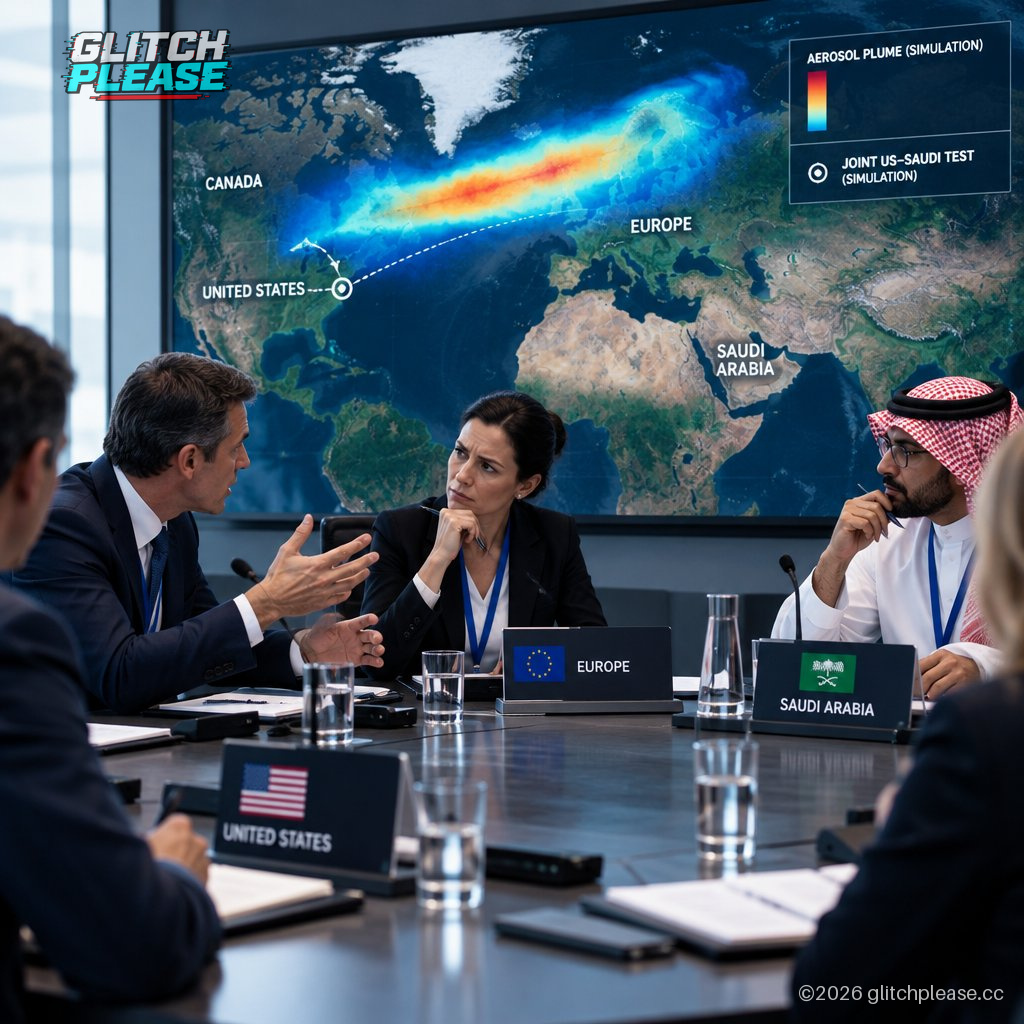
A simulation of solar geoengineering diplomacy ended without a deal, even as participants confronted reports of a major aerosol plume and a covert effort to derail scientific oversight. The exercise’s central finding was less about the technology than the politics around it: strategic competition and national sovereignty repeatedly took priority over climate concerns.
The plume was part of the game, not a real-world event. In the scenario, a joint US-Saudi test of technology developed by a fictional company called Stardust had released aerosols. Not all participants knew who was responsible. The crisis forced players to consider how countries might detect secret tests and build a monitoring network using satellites and other observational tools.
Then came an offer of money to help fund that monitoring effort. A player representing an NGO called the Climate Futures Cooperative approached Golja, who was playing a scientific role. “Great. Fabulous. Why wouldn’t I do that?” she recalled thinking. The catch: within the simulation, the cooperative was backed by the fossil fuel industry.
The organizers had built in a recognizable conflict of interest. Fossil fuel companies and major producing countries such as the US and Saudi Arabia could have reason to favor a technology that might counter some effects of climate change without requiring an immediate end to burning coal, oil and gas. The exercise did not establish what those actors would do in reality. It did show how quickly funding and suspicion could complicate a negotiation already short on trust.
The fictional NGO spent much of the game objecting to process and quietly disrupting discussions. Some players representing Russia, the US, SpaceX and Stardust worked out that the cooperative was not what it appeared to be, says Young. But they decided the arrangement suited their interests and kept quiet. When the group later offered Golja money, the move damaged her credibility and further isolated the scientific voice in the room. “It was a whole mess,” she said.
That maneuver was enough to leave Golja in tears by the end of the final day. The wider talks had fared no better. European countries and Canada tried to build support for safeguards and open scientific research, but proposals stalled amid delay tactics and tense clashes over competing strategic interests. No deal emerged.
Solar geoengineering proposals generally involve reflecting a small portion of sunlight to reduce warming. That prospect raises difficult questions about who could authorize deployment, how effects would be monitored, and how countries might respond if they disagreed about the risks. This simulation cannot predict exactly how governments or companies would behave. It does offer a warning about the gap between designing oversight on paper and getting powerful players to accept it when their interests diverge.
The researchers’ final report, on work sponsored by the UK government-funded Advanced Research and Invention Agency, concluded that “strategic competition and state sovereignty drove the simulations, not climate concerns.” Dimming the Sun is already an extraordinary governance problem. The game’s less extraordinary lesson is that nobody gets to solve it in a room untouched by money and power.
Sources: Glitch Please! and Ars Technica — https://arstechnica.com/science/2026/10/they-war-gamed-dimming-the-sun-it-went-even-worse-than-you-think/ — Source reporting and quotations
Generated by AI
