
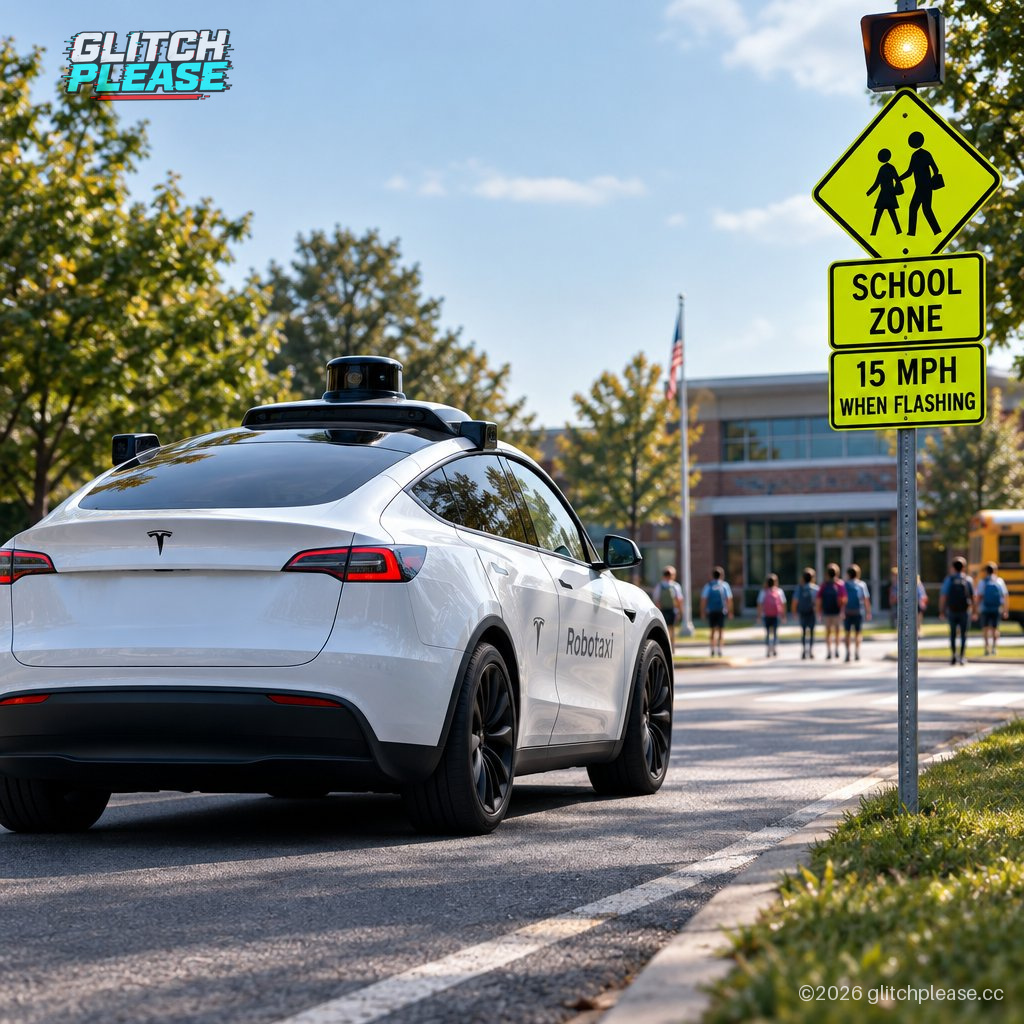
Tesla’s robotaxi program is facing a federal review over allegations that its vehicles exceeded posted speed limits in active school zones. The National Highway Traffic Safety Administration says its Office of Defects Investigation is evaluating a petition concerning roughly 1,000 Tesla robotaxis using the company’s automated driving system.
The petition, received September 23, 2026, asks NHTSA to investigate 2026 model-year Tesla Robotaxis, including Model Y vehicles and the Cybercab, while the automated driving system is engaged. Its claim is specific: the system allegedly exceeds posted speed limits in active school zones. NHTSA is evaluating that allegation; the agency has not announced a finding that Tesla vehicles violated those limits.
That distinction matters. A petition asking regulators to investigate is not the same thing as a completed investigation, a confirmed defect, or a finding of liability. The immediate question is whether the agency finds enough evidence to pursue the issue further. Until then, the allegation remains an allegation—not a verdict delivered by the presence of a federal acronym.
The setting makes the claim consequential even before it is resolved. School-zone limits are meant to apply where children may be nearby, and the allegation concerns vehicles operating under an automated driving system. A system can follow many traffic rules and still make a consequential error in a particular context; “self-driving” is not a substitute for evidence about how it handles posted limits, changing road conditions, or the activation of a school zone.
This review also lands amid other regulatory attention on Tesla’s driver-assistance technology. NHTSA has opened a separate investigation into Full Self-Driving over reported traffic violations, including running red lights and driving on the wrong side of the street. The Cybercab, which launched earlier this year according to the source report, is also under investigation over its lack of side mirrors, pedals, and a steering wheel. Those are distinct matters, not evidence that the school-zone allegation has been established.
Tesla is not the only robotaxi company facing scrutiny over how automated vehicles behave around children and school traffic. Waymo has faced separate inquiries, including over allegations that its vehicles illegally passed school buses and an incident in which a robotaxi hit a child near a California elementary school. Those inquiries do not establish anything about Tesla’s vehicles, but they underline a shared regulatory problem: evaluating automated driving requires looking at specific behavior on public roads, not just broad claims about capability.
For communities where robotaxis operate, the practical issue is whether regulators can verify that these systems obey local restrictions—and respond appropriately when the rules change by place or time. For companies, the review is a reminder that expanding a fleet also expands the number of real-world situations regulators can examine. The technology may be automated. Accountability for what it does is not.
Sources: Glitch Please! and The Verge — https://www.theverge.com/transportation/1010364/tesla-robotaxi-school-zonespeeding-investigation — Reporting by Stevie Bonifield
Generated by AI
