
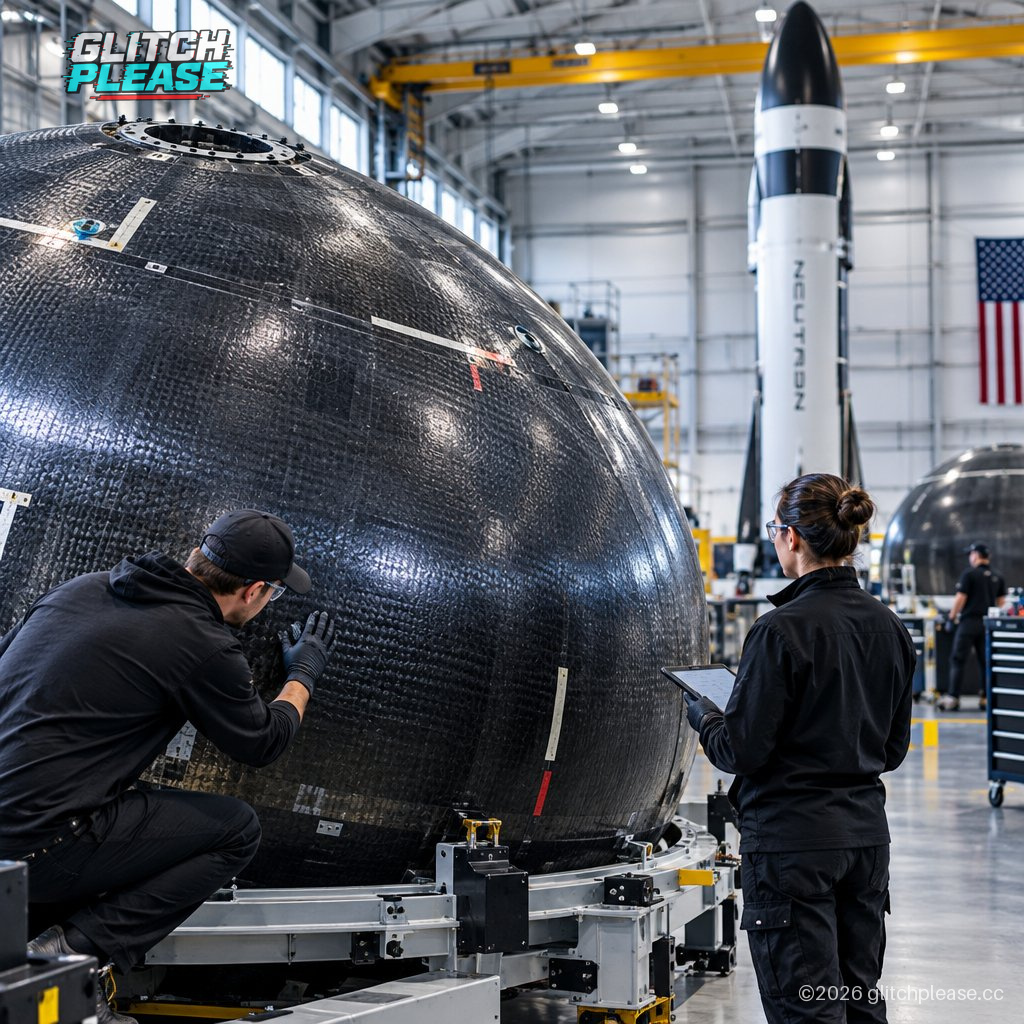
Rocket Lab’s Neutron rocket will not make its first launch until 2027, after inspections found voids in a newly manufactured carbon-composite propellant-tank dome. The defects don’t necessarily mean the structure would fail in flight, CEO Beck said, but the company is holding the line on its stated standard: it wants confidence in the rocket’s structural margins before proceeding.
Neutron was announced in 2021 with a first flight targeted for 2024. That schedule has now moved at least three calendar years, with a manufacturing problem in an unusually large composite structure adding another delay. The future, as ever, remains subject to the curing cycle.
Rocket Lab says Neutron’s first stage is the largest pressurized structure ever made from carbon composite. Building components at that scale required the company to develop new manufacturing processes outside traditional autoclaves, including custom cure cycles for the large forward and aft tank domes.
In this case, the trouble appeared in thicker sections of the forward dome. Beck said engineers traced the voids to a design change intended to strengthen the rocket after a propellant tank ruptured during a hydrostatic pressure test in January. That earlier failure was attributed to a manufacturing defect at a critical tank joint.
The tank involved in the January test had been made by a third-party contractor using a manual hand-lay process, Rocket Lab said. The company had opted for that approach so testing could continue while it brought an automated fiber placement machine online. That machine is now operational. Rocket Lab also removed joints from the first-stage tank structure and increased the thickness of some composite sections. The added material, in an unwelcome bit of engineering irony, is where the voids formed.
Beck emphasized that the defects do not prove the dome would have failed during a flight. But Rocket Lab’s position is that “not proven unsafe” is not the same as an acceptable margin. That is a sensible distinction for a pressurized rocket structure—and considerably less expensive than testing the alternative in public.
The company says it has since modified the manufacturing process again. An aft propellant dome built using the updated procedure passed inspection, and Beck said that result gives Rocket Lab confidence to make a new forward dome. The investigation, process changes and replacement part have pushed the first launch into next year, meaning 2027.
There is a real trade-off here: large composite structures can help make rockets lighter, but manufacturing them reliably at scale is hard, and adding strength on paper does not automatically produce a sound part. Rocket Lab says it has addressed the latest issue; the passed aft dome is encouraging evidence, not a launch record. Neutron’s next milestone is getting the replacement forward dome through inspection. After years of schedule promises, the rocket still has one basic requirement left: it has to be built correctly before it can fly.
Sources: Glitch Please! and Ars Technica — https://arstechnica.com/space/2026/10/rocket-lab-announces-another-delay-for-its-medium-lift-neutron-rocket/ — Reporting on Rocket Lab’s Neutron delay and comments from Beck.
Generated by AI
