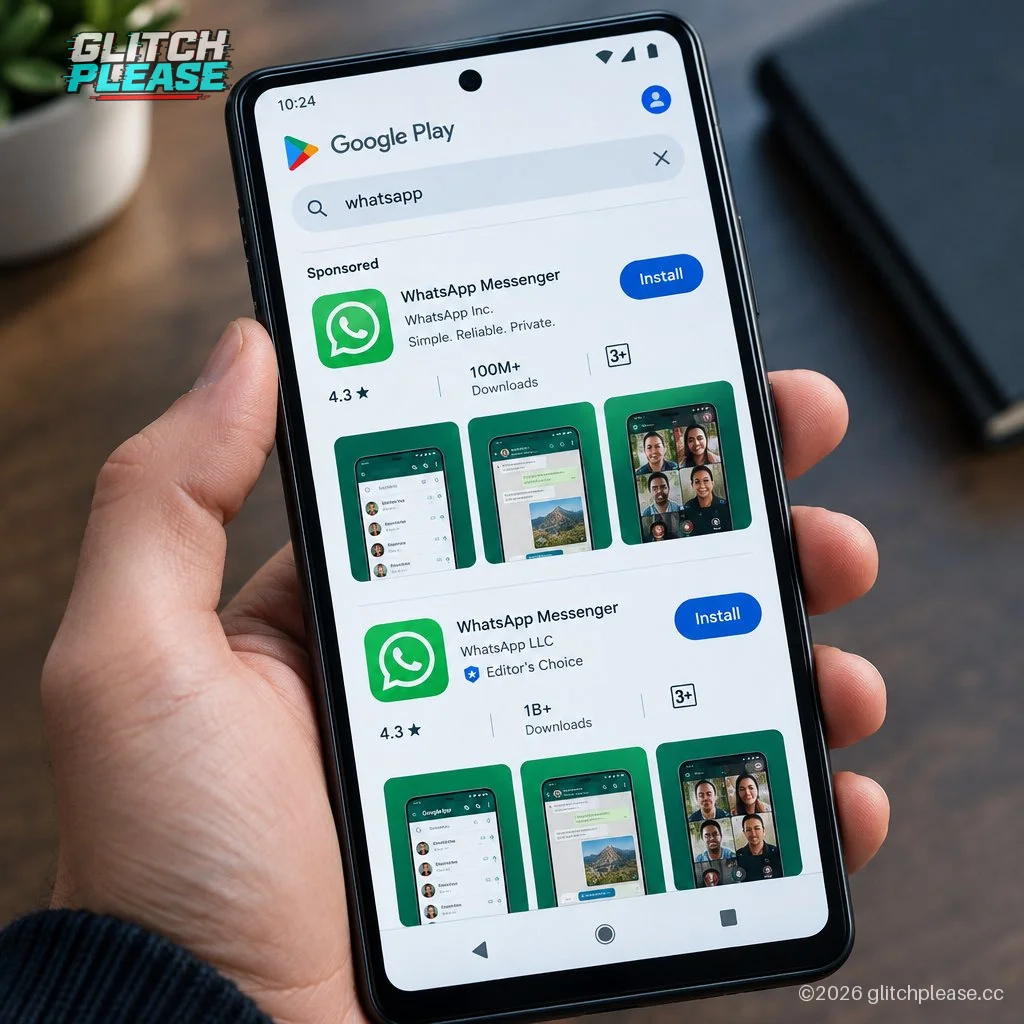
A fake WhatsApp app reportedly collected more than 500,000 downloads while appearing in a sponsored slot above the real app on Google Play. At the time of reporting, the lookalike’s listing was still live. Google’s app store has once again managed to put the impostor ahead of the thing it is impersonating. Sponsored placement, it turns out, is not the same as a background check.
The listing, from a developer using the name “Agment Assets sallu,” reportedly copied the official WhatsApp app’s icon, screenshots, and text. The developer had no other apps listed on the Play Store. A Reddit user said they saw the fake app in the sponsored position; Android Authority reported its download count.
There is a conspicuous difference between the two listings: the real WhatsApp has more than 10 billion downloads, over 246 million reviews, and an “editor’s choice” badge. That is useful context, though users shouldn’t have to conduct a forensic comparison just to find the genuine app. When a copy uses the same presentation and Google places it above the original, the store is doing little to make the distinction obvious.
A familiar problem, with a useful warning
The WhatsApp lookalike follows a separate Chrome clone spotted on the Play Store earlier in the week. The cases do not establish that the apps shared a developer or purpose, and the available reporting does not describe what the WhatsApp clone does. That uncertainty matters: impersonating an app is reason for caution, but it is not proof that a particular app stole data or harmed its users.
Android Authority also suggested the listing may be using Google Play’s Early Access program to disable public user reviews. If so, that could make it harder for users to flag the app for other people. The explanation is a possibility, not a confirmed account of how this listing works. Still, a review system that can be absent from a convincing copy leaves one less visible warning sign for people browsing the store.
Google did not immediately respond to a request for comment. Until the listing is removed or the company explains what happened, the practical advice is familiar and irritatingly necessary: check the developer and the app’s details before downloading, especially when a result is marked sponsored. In this case, the real app’s enormous download and review counts offer a strong clue. They should not have to serve as Google Play’s substitute for keeping a convincing fake out of the spotlight.
App stores promise convenience: find the thing, tap install, get on with your life. When a paid placement puts a lookalike ahead of the original, the convenience is still there. So is the extra homework.
Sources: Glitch Please! and The Verge — https://www.theverge.com/tech/1012918/google-play-store-fake-whatsapp-android — Reporting by Stevie Bonifield, Android Authority — Reported the fake app’s download count and noted its possible use of Google Play’s Early Access program.
Generated by AI