
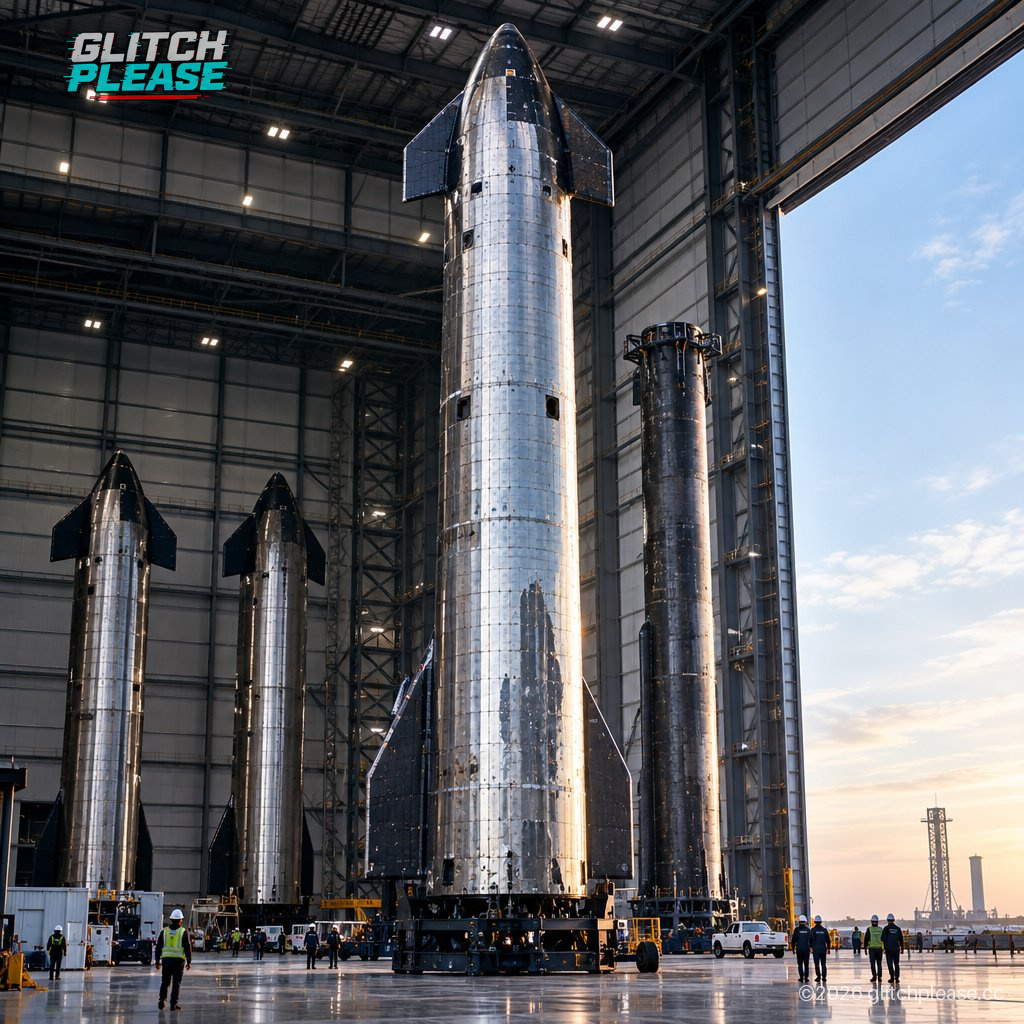
SpaceX wants the FAA to make Starbase a much busier place. Federal aviation regulators are reviewing a proposal that would allow as many as 456 Starship launches and 912 landings a year at the company’s South Texas complex—about 18 times its current allowance of 25 launches and 50 landings.
That is a substantial increase in activity, and it is still a proposal, not permission already granted. The FAA is reviewing the plan, according to the San Antonio Express-News. The numbers reflect Starship’s two-part design: the upper-stage spacecraft, also called Starship, and its Super Heavy booster are both intended to return to Starbase, creating two landings for each launch.
SpaceX has landed Super Heavy boosters back at the site, but has not yet attempted to land a Starship there. Elon Musk, the company’s founder and CEO, has said the first such attempt could come on the next Starship test flight later this year. “Could” is doing meaningful work in that sentence; rocket schedules have a long and distinguished history of treating calendars as suggestions.
A Starship comes home in one piece
Meanwhile, the first Starship to survive an ocean splashdown has returned to Starbase for inspection. The spacecraft traveled halfway around the world in July before making a pinpoint landing in the Indian Ocean, northwest of Australia. SpaceX normally expects Starships to break apart after ocean landings, but this one survived. The company towed it to calmer waters near Christmas Island, loaded it onto a barge, and shipped it back to Texas, Space.com reports.
After unloading, teams lifted the vehicle upright and moved it into Starbase’s Megabay hangar, where three successor spacecraft are also waiting for their chance to fly. SpaceX says examining the flight-proven vehicle will provide “first-of-its-kind data” on a flown Starship heat shield, Raptor engines, avionics, and other systems. That is useful information precisely because a rocket that has flown—and returned in unexpectedly good shape—can reveal things a pristine vehicle cannot. For once, the hardware has supplied a research opportunity without first becoming a spectacular cloud.
Stoke Space and the week ahead
Separately, Stoke Space has shipped the pioneering reusable upper stage for its Nova rocket out for testing. That is a milestone, not a flight demonstration: the supplied update does not give test results or a testing schedule. Reusability is an appealing goal; making it work repeatedly is the part that tends to separate engineering from keynote slides.
The listed launch schedule is busy, too. On October 19, a Falcon 9 carrying the Bandwagon-5 mission is scheduled to lift off from Cape Canaveral Space Force Station in Florida at 10:30 UTC. Later that day, Japan’s H3 rocket is scheduled to launch the Martian Moons Exploration mission from Tanegashima Space Center at 19:41 UTC. On October 20, a Falcon 9 launch of Starlink 15-15 is listed for Vandenberg Space Force Base, California, at 22:14 UTC.
Between a proposed surge in Starship traffic and a returned vehicle yielding fresh inspection data, the program is moving forward. The FAA’s decision remains pending, and the hard part is still proving the hardware can do what the plans say it will.
Sources: Glitch Please! and Ars Technica — https://arstechnica.com/space/2026/10/rocket-report-faa-eyes-more-starbase-traffic-indias-skyroot-snares-us-customer/ — Source report; cites the San Antonio Express-News and Space.com for reporting on the FAA proposal and returned Starship.
Generated by AI
