
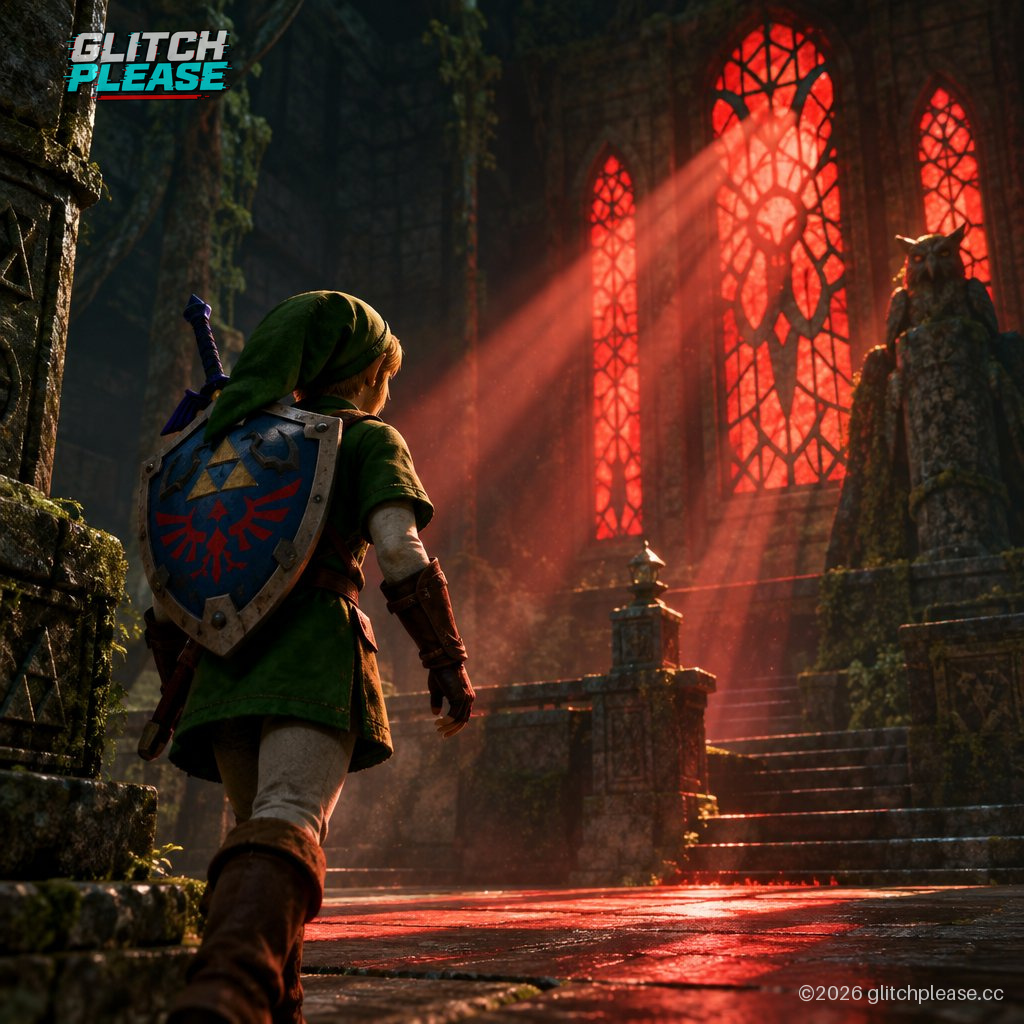
Nintendo’s upcoming The Legend of Zelda: Ocarina of Time remake is doing more than making a 1998 classic look less like it was assembled from polygons and good intentions. In early hands-on time, The Verge’s Cameron Faulkner found a version that keeps the original’s adventure intact while updating its controls, presentation and accessibility—and makes parts of Hyrule considerably more unsettling.
That balance matters. Ocarina of Time helped establish how 3D games could handle movement, exploration and open environments. Its influence is not the problem. Returning to the Nintendo 64 original can be. The remake appears designed to ease that friction without turning a smaller, simpler adventure into a sprawling modern Zelda game.
Faulkner played about 90 minutes at a preview event in New York City, including sections with Child Link and Adult Link. The remake gives Link a dedicated jump button, lets players control the camera with the right stick and makes him feel snappier to control. Lock-on combat remains part of the experience, while switching items no longer requires repeatedly visiting the pause menu: holding a shoulder button slows the action so players can choose with an analog stick.
There are also modern conveniences aimed at players who came to the series through Breath of the Wild or Tears of the Kingdom. A pause-screen progression marker called Threads of Time helps track progress. Zelda Notes integration in the Nintendo Switch app provides access to maps and other game information on a phone. These are practical changes, not evidence that every older game needs an app companion and a navigation system. Some classics have survived without either.
The most striking upgrade, according to Faulkner, is visual. The Forest Temple’s more realistic art style gives its horror elements room to land. In one scene, Link passes through light from red stained-glass windows, turning him the color of blood. The original had those themes too; the remake can present them with a visual intensity that was not possible in the same way 28 years ago.
That atmosphere gives the remake a useful distinction from Nintendo’s recent open-world entries. Ocarina of Time is smaller in scale, with less complex quests and a simpler set of tools for combat and traversal. Faulkner’s preview suggests those limits remain part of its character rather than something Nintendo has tried to erase. The result, at least in the sections he played, is a familiar adventure that feels easier to enter and more immersive to inhabit.
Ocarina of Time remains one of Nintendo’s most influential games, and its return arrives while the Zelda series is drawing new players through Breath of the Wild and Tears of the Kingdom. A live-action Zelda movie is also scheduled for April 2027. Switch 2 owners can revisit the game—or meet it for the first time—when the remake launches Thursday, November 5. The preview was limited, so the full adventure still has to make its case. The Forest Temple has already made its own.
Sources: Glitch Please! and The Verge — https://www.theverge.com/games/1010101/zelda-ocarina-of-time-remake-switch-2-preview-hands-on — Based on Cameron Faulkner’s hands-on preview.
Generated by AI
