
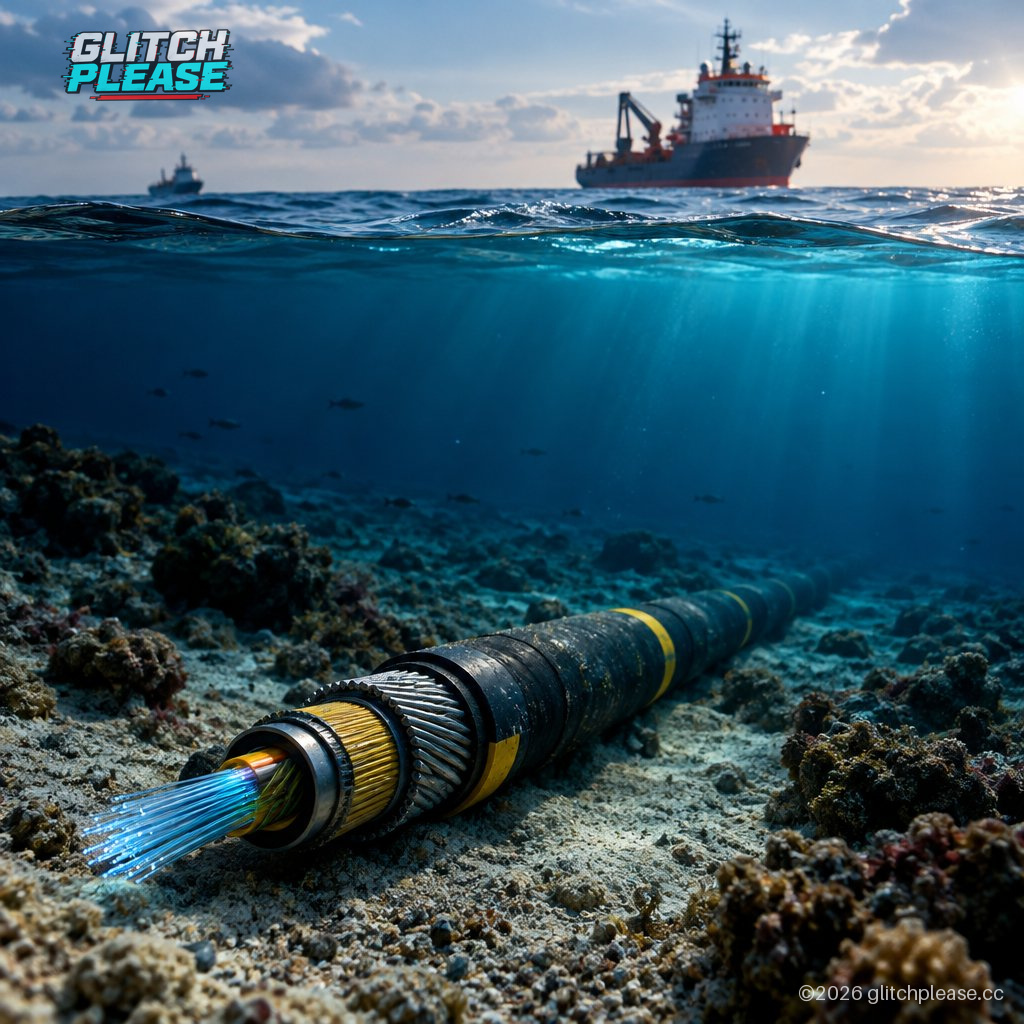
The Internet’s undersea cables have long benefited from an arrangement that sounds less like a security system than a request for good manners: countries generally refrained from damaging infrastructure on the seabed. That informal restraint is under pressure, while the cables themselves have become far more important than they were in the era of occasional international phone calls.
In an interview with Ars Technica, Elisabeth Braw, author of Undersea War, described the old understanding as a system dependent on countries acting as “good seabed citizens.” It held even through the Cold War, she said, when the cables carried international calls and telegrams but were used far less intensively than today. Modern societies and economies rely on them continuously. The consequences of disruption could extend beyond communications to financial activity and operational losses.
Recent events offer reason to take that shift seriously, without treating every incident as evidence of a coordinated campaign. In February 2025, the captain of the Chinese-owned ship Hong Tai was convicted by a court in Taiwan of severing an undersea telecommunications cable. He was sentenced to three years in prison in June. Taiwan’s legislature later increased penalties for intentional damage to undersea cables or pipelines, allowing sentences of up to seven years.
Other developments described in the report involve different kinds of pressure. Iran has sought to impose fees on operators of undersea cables running through the contested Strait of Hormuz. Separately, a joint operation by the United Kingdom, Norway and the United States confronted Russian submarines that were practicing with a new technology to disable undersea cables in Arctic waters near Norway’s Svalbard archipelago.
Those examples are not interchangeable. One involved a criminal conviction; another concerns proposed fees; the third involved military activity. Together, they point to a broader vulnerability: critical infrastructure crosses jurisdictions and waters where the expectation of restraint may not be enforceable in the way a shore-based security perimeter is. The source does not establish that all these events caused cable outages, and it would be careless to suggest otherwise.
The stakes, however, are plain. Subsea cables carry international communications and financial traffic, while pipelines also support energy infrastructure. Their importance has grown faster than the old assumptions around protecting them. As Braw told Ars, even a brief disruption could have substantial consequences for places such as New York and for its role as a financial hub.
The unresolved question is what happens when countries stop treating the seabed as shared infrastructure worth leaving alone. That is not a prediction that the cables are about to fail; it is a warning that reliance has increased while confidence in restraint is weakening. The fine print of international norms matters. So does whether anyone still follows it.
Sources: Glitch Please! and Ars Technica — https://arstechnica.com/gadgets/2026/10/the-internets-undersea-backbone-is-slipping-into-to-the-danger-zone/ — Source article and interview with Elisabeth Braw, author of Undersea War
Generated by AI
